Educational editorial content prepared for drhindsaeed.com. No named clinician review is claimed.
This is general educational information, not a diagnosis or an individual treatment plan. Treatment selection depends on a dental examination and the condition of the tooth.
What digital dentistry means for your appointment
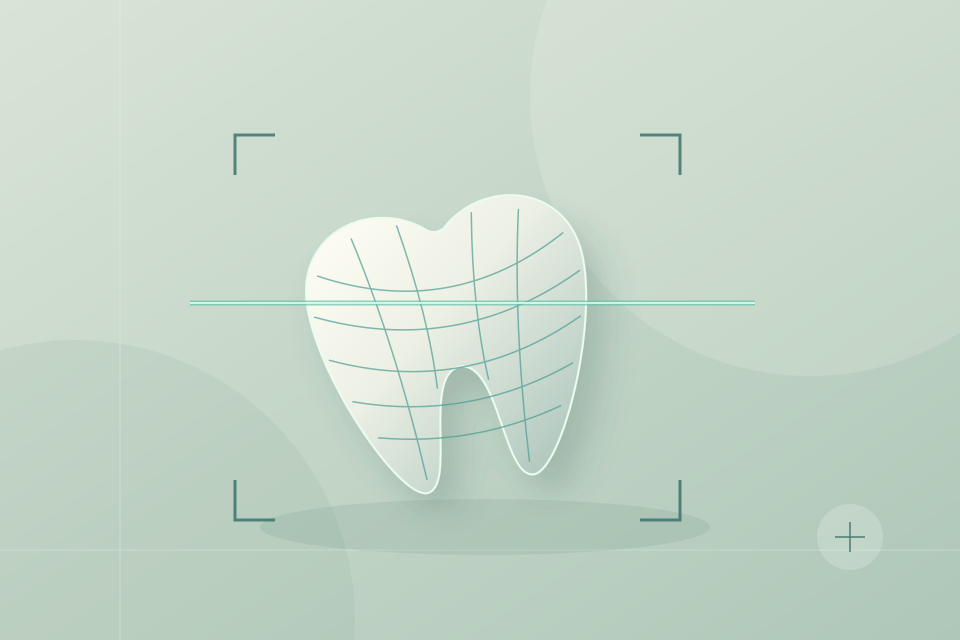
Digital scanning can make parts of restorative treatment easier to understand and coordinate. It gives the dental team a three-dimensional record to work from when planning a crown or partial restoration. But a digital workflow is still a clinical service, not a machine making independent decisions. The tooth needs diagnosis, the restoration needs a suitable design and material, and the final fit must be checked in your mouth.
Think of three separate questions: How is the shape recorded? How is the restoration designed? How is it manufactured? A practice can combine digital and conventional methods rather than using one completely digital route. Asking about those stages is more informative than asking whether treatment is simply “digital.”
A scan is a record of the tooth surfaces
An intraoral scanner captures visible surfaces to create a digital model. A conventional impression instead records their shape in a physical material. UCLH describes how displaying a digital model can help clinicians explain treatment to patients and communicate with the laboratory. UCLH account of digital impression workflows.
Optical scanning is different from taking an X-ray. It does not use ionizing X-ray radiation, and it cannot replace every diagnostic image your dentist may need. The NHS Health Research Authority describes a scanner-based study using a non-radiographic surface record. NHS research information. If several types of imaging are proposed, ask what question each one answers.
From the model to a crown or onlay
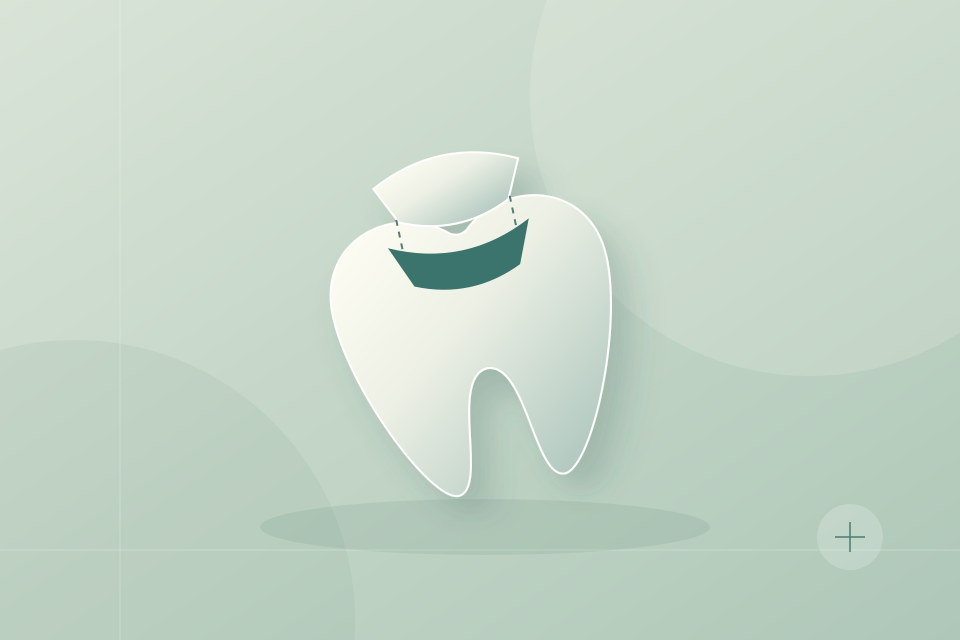
CAD means computer-aided design; CAM means computer-aided manufacturing. The digital model helps the team design the restoration, and a manufacturing system can mill it from a suitable block. Depending on the material and workflow, further processing and finishing may be needed. The laboratory may remain closely involved even when the impression was taken digitally. ADA overview of dental technologies.
The design file is not the finished clinical result. Ask who checks the proposed shape, the contacts with adjacent teeth, and the way the restoration meets the opposing teeth. It is reasonable to want convenient treatment, but speed should sit alongside the explanation of why a crown, onlay, or different restoration is appropriate for your tooth.
What clinical studies actually show
A randomized clinical trial involving 70 posterior single crowns found better fit and efficiency for the particular intraoral-scanning workflow tested than for conventional impressions followed by cast scanning. The print publication was in 2024, with earlier online availability. This is encouraging evidence for a defined indication and system; it is not proof that every scanner is always more accurate for every type of case. Clinical trial of single-crown fit.
Patient comfort is another outcome. In a study of 40 people receiving implant-supported single crowns, most preferred digital recording, while the evaluated quality of the restorations did not differ significantly. Those were implant cases, so the findings should not be presented as a universal result for all natural-tooth treatments. Randomized crossover study.
Why a repeat scan or a conventional impression may be sensible
A clear-looking model is not enough if an important margin was not recorded accurately. The edge of the planned restoration may be difficult to expose when it lies beneath the gum. A small randomized clinical study published in 2026 found that gum displacement improved reproduction of shallow subgingival margins, underscoring the importance of clinical conditions during scanning. Study of margin recording.
If the team repeats a section or changes the impression method, ask what they are trying to verify. That can be a quality-control decision rather than a failure of care. You can also mention a strong gag reflex, difficulty keeping your mouth open, or previous discomfort so that the appointment can be planned around your needs. No impression method should be sold as universally effortless.
Does CAD/CAM mean a same-day restoration?
Some chairside systems can make selected restorations during one visit, but digital scanning alone does not establish that the practice has in-house manufacturing or that your case is suitable. The ADA describes chairside CAD/CAM as one available workflow. ADA technology overview. Confirm the actual plan rather than assuming that an advertisement for scanning promises a completed crown that day.
Ask whether laboratory input, an interim restoration, or an additional assessment is expected, and what could change the schedule. For selected partial crowns, a four-year randomized trial found similar clinical outcomes for the tested pressed and milled lithium-disilicate workflows. Convenience is therefore a separate question from a claim of superior durability. Four-year trial.
Milling and 3D printing are different technologies
Milling removes material from a block; three-dimensional printing builds an object additively. “3D-printed” is not a material name. A printed resin restoration and printed zirconia are different products with different manufacturing requirements. A 2025 randomized trial of printed zirconia single crowns reported comparable findings to milled crowns at 12 months and called for longer follow-up. Printed-zirconia clinical trial.
Clinical research also exists for definitive printed resin-based restorations, including a two-year prospective study published in 2025. These findings are useful, but short follow-up and selected applications should not become a lifetime durability claim or a recommendation for every tooth. Ask about the exact material, intended use, local authorization, and long-term evidence relevant to it. Two-year clinical study of printed crown resins.
What to ask before agreeing to treatment
Ask for the diagnosis and the reason for the restoration before discussing equipment. Then ask which stages will be digital, which material is proposed, where it will be made, how many visits are expected, and what the fee includes. Also ask who holds the scan and how it can be transferred if future care is provided elsewhere. A digital preview can be a discussion aid; it should not be treated as a promise of an identical clinical outcome.
Technology does not remove the need for maintenance. The restored tooth and surrounding teeth still need fluoride toothpaste, interdental cleaning, and appropriate dental reviews. NIDCR prevention guidance. This article explains available approaches in dentistry; availability at a particular practice should be confirmed at consultation.
Educational note
General education, not a diagnosis or an individual treatment plan. Confirm the availability of specific techniques with the practice.
Common questions
Is a digital impression an X-ray?
No. An optical intraoral scan records visible surfaces without ionizing X-rays. It does not show all the internal information that a clinically indicated dental X-ray can provide.
Will my crown definitely be ready the same day?
No. Same-day treatment depends on the practice’s equipment, the material, the tooth, and the clinical plan. Ask for a case-specific schedule before arranging your visit.
Are digitally made crowns always better?
No. Research supports digital workflows for selected uses, but diagnosis, material selection, clinical execution, and final checks still matter. Conventional and combined workflows remain valid options.
Should I choose a 3D-printed permanent crown?
Ask about the exact material, approved intended use, and evidence for your situation. Some printed definitive restorations have clinical data, but short studies do not establish lifetime durability or universal superiority.
Sources and references
- ADA: Digital dentistry technologies
- UCLH: From analogue to digital dentistry
- NHS Health Research Authority: Digital PAR scoring research
- Liu et al.: Randomized clinical trial of crown fit from intraoral versus conventional impressions
- Seth et al.: Patient perceptions of digital and conventional implant-crown workflows
- Volvaikar et al.: Randomized clinical study of subgingival finish-line reproduction
- Ferrari-Cagidiaco et al.: Pressed and milled lithium-disilicate partial crowns at four years
- Cai et al.: Randomized trial of 3D-printed zirconia crowns
- Additively manufactured definitive crown resins: two-year clinical results
- NIDCR: Fluoride and dental health